
Criminal Court Cases in Marshall County
Marshall County criminal cases split between District and Circuit Court. District Court handles misdemeanors, violations, traffic matters, and the preliminary phase of felony prosecutions. Circuit Court is the felony trial court. A felony can therefore begin under an F case number in District Court, then continue as a CR case after indictment in Circuit Court. Searching just one division can leave out the complaint, probable-cause proceeding, indictment, plea, or final sentence.
Circuit Court Clerk Tiffany Fralick Griffith keeps both courts' files at the Marshall County Judicial Building, 80 Judicial Drive, Unit 101, Benton. Call Circuit at 270-527-3883 or District at 270-527-1721. The counter is open weekdays from 8 a.m. to 4:30 p.m. The county government site and official department directory help distinguish justice offices. The County Clerk on Main Street does not hold these criminal case files.
Before calling, decide which event must be proved. The complaint or citation shows how the case began. An indictment shows the grand jury charge. A bond order states release terms. The docket maps hearings and filings, while the judgment and sentence show the court's final act. Naming that paper helps the clerk locate and price the right copy.
Marshall County Court Numbers
The case number is more than a tracking code. An F file points to a felony-charge matter in District Court, while a CR number marks the Circuit criminal case. M and T identify misdemeanor and traffic activity in statewide AOC reports. When a name produces two Marshall County records tied to one event, compare filing dates, charges, and division before treating them as separate prosecutions.
The official Kentucky court forms catalog shows the forms used across the court system. Its layout helps distinguish a petition, order, judgment, and other filed paper.
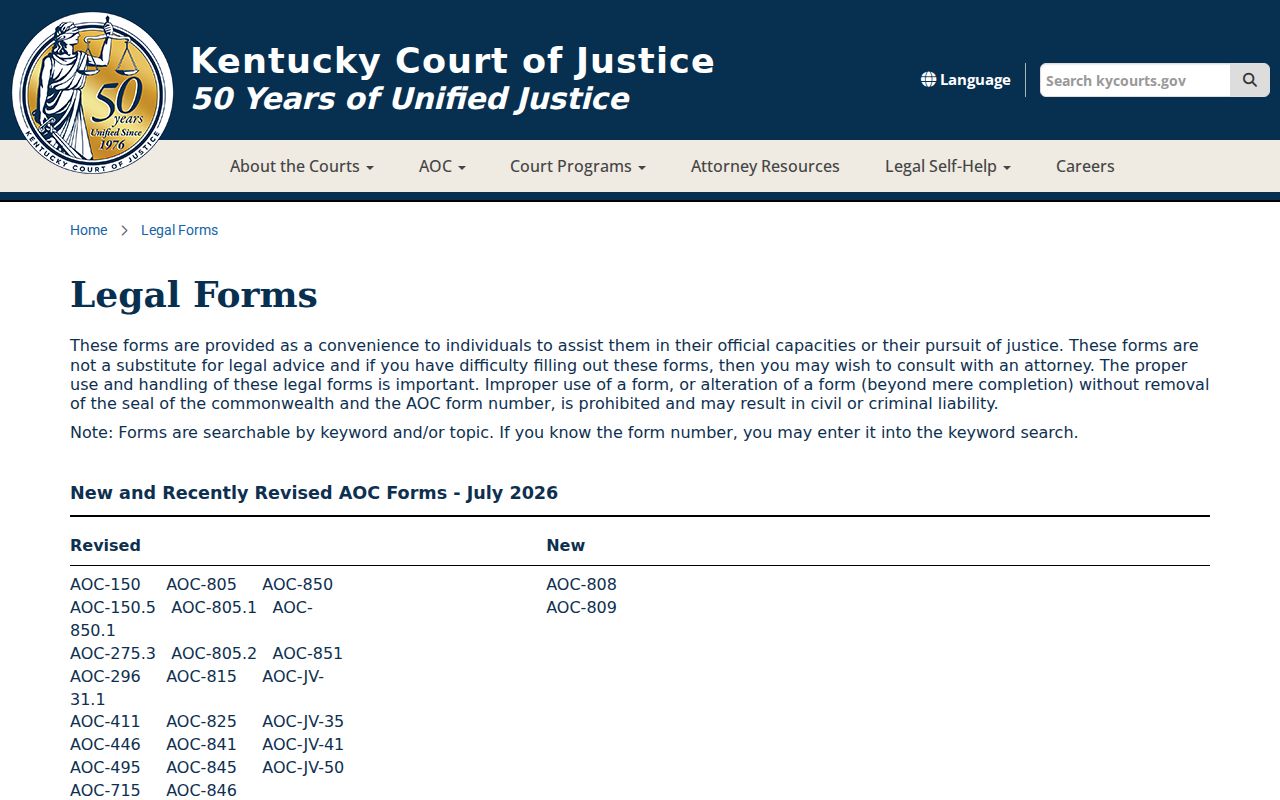
A form title alone does not prove that the form was filed in a given Marshall County case. The stamped copy and docket entry provide that link.
Marshall County Case Record Searches
There is no free anonymous Marshall County docket portal. The clerk counter and court phone lines are the direct public access channels. AOC FastCheck can locate statewide Kentucky court activity by name, but it is an index-style report marked “Not an Official Court Record.” Use it to identify a county and case number, then request the signed papers from the clerk.
- Gather the full name, approximate filing year, possible case number, and likely court division.
- Call District for a misdemeanor or felony-origin file, and call Circuit for an indicted felony.
- Ask for the case jacket or docket and name the specific documents needed.
- Confirm whether the Marshall County file is on site, archived, or destroyed under retention rules.
- Ask about copy and certification costs, then verify the result against signed orders.
FastCheck requires registration. One-Time Request provides a single mailed report. Processing varies, and when a report on another person finds a record, AOC sends notice and a copy to that subject.
| AOC report field | What it helps identify | Clerk follow-up |
|---|---|---|
| County of origin | Where the Kentucky case was filed | Contact that county's court clerk |
| Case number | The local and AOC identifier | Quote the full number and division |
| Original and amended charge | How the filed allegation changed | Request complaint, indictment, or amendment |
| Charge and disposition dates | When filing and outcome entries occurred | Request the matching docket and order |
| Disposition and clerk memo | Recorded result and explanatory note | Obtain the signed judgment or dismissal |
FastCheck and Marshall County Cases
The AOC background-check service covers T, M, F, and CR cases across all 120 Kentucky counties. It does not cover federal cases. Expunged or purged matters are excluded. A report may show charges, amendments, a disposition, and a memo, yet it cannot replace the complaint, bond order, plea, judgment, or sentence signed in Marshall County.
The Kentucky AOC also handles its own administrative records through a route distinct from county court files. Its administrative-records page illustrates that difference.
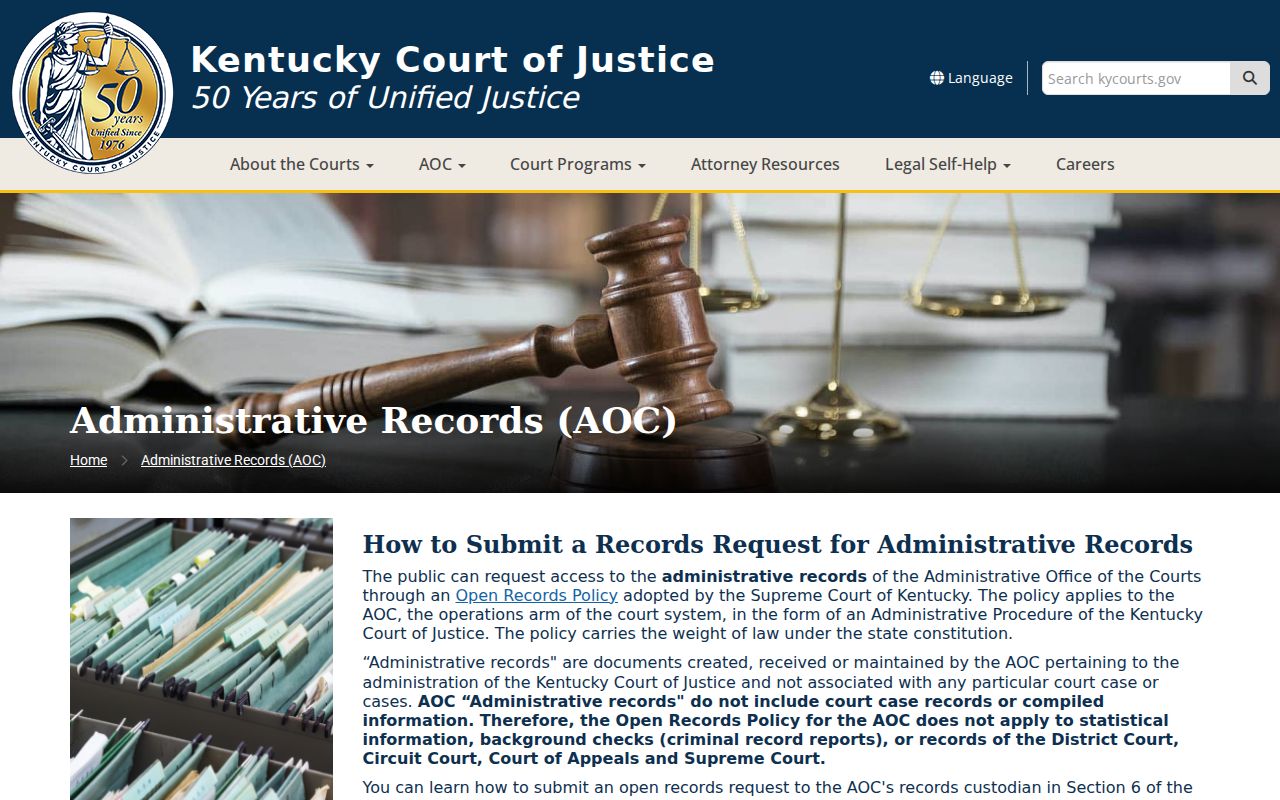
Send a request for a filed Marshall County criminal order to the Circuit Court Clerk, not to the AOC administrative-record custodian.
AOC reports can be useful when the filing county is unknown because the search spans Kentucky's District and Circuit Courts. Once Marshall appears as the county of origin, copy the case number exactly. Ask the clerk whether a matching District origin and Circuit indictment both exist. The report's disposition field should be checked against the signed order, especially when the charge was amended or several counts ended in different ways.
Note: A statewide name match is a search lead, while the signed county order is the authoritative court act.
What a Criminal Case File Contains
A complete Marshall County case file connects the filed allegation to each later court act. Ask for more than a docket sheet when the exact bond terms, plea, dismissal grounds, or sentence matter. Public availability varies by document, and confidential details may be redacted.
| Header | Case number, court division, filing date, status, and judge. |
|---|---|
| Parties | Commonwealth, defendant, and counsel appearances. |
| Charges | Description, KRS citation, class, count, and amendments. |
| Bond and warrant | Type, amount, conditions, issuance, and return where public. |
| Events and papers | Complaint, indictment, hearings, motions, plea or trial, and signed orders. |
| Disposition | Dismissal, amendment, acquittal, conviction, judgment, and sentence. |
| Financial and schedule | Public fines, costs, restitution, balances, and hearing settings. |
Marshall County Charge Classes
A KRS citation ties a charge to Kentucky law. The charge description and class show the allegation as filed at that stage, not a final finding. Under KRS 532.020, Class D felonies carry a general one-to-five-year range, Class C five to ten, Class B ten to twenty, and Class A twenty to fifty years or life. Offense-specific laws and persistent-felony-offender rules can change the result.
The official KRS Chapter 532 text is the source for current classification and sentencing terms.
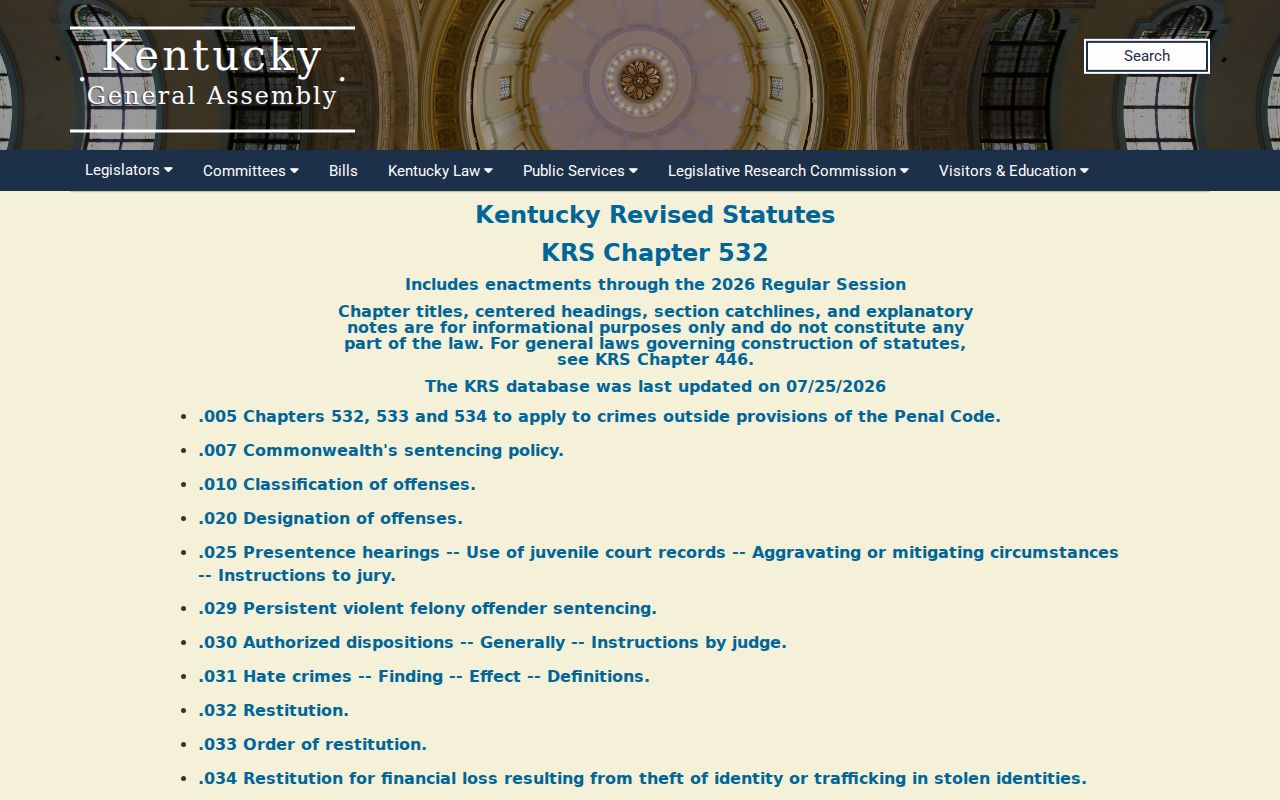
Read the statute with the final Marshall County judgment. An arrest charge may be amended, dismissed, or replaced before disposition.
The broader Kentucky Revised Statutes index provides the current chapter and section structure.
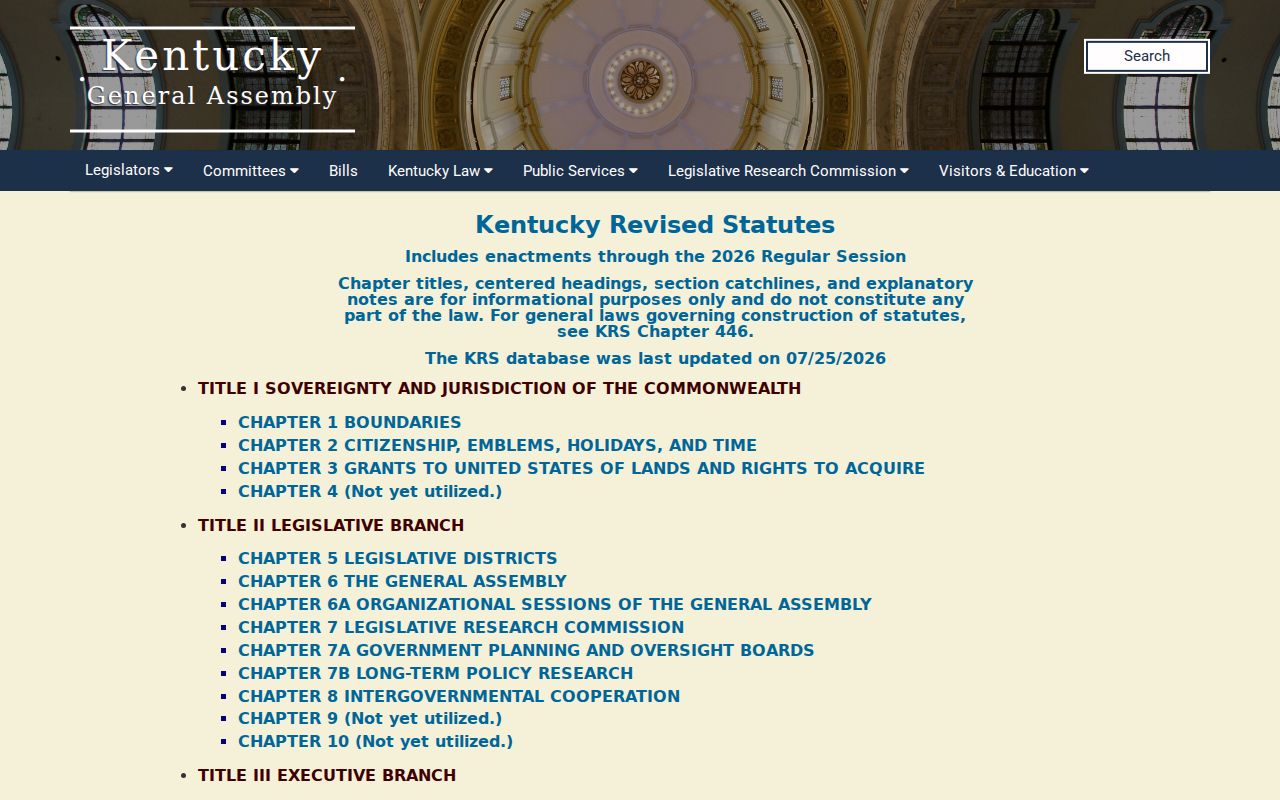
That index helps decode a citation, while the clerk's filed order shows how the law was applied in the case.
Criminal Case Stages in Marshall County
A criminal case record grows as the prosecution moves. The arresting officer's allegation can reach District Court as a citation or complaint. A felony then may proceed through a preliminary stage before indictment creates a Circuit Court file. Arraignment records the plea and scheduling. Pretrial motions can alter evidence or procedure. A plea or trial leads to disposition, followed by sentencing when required.
Case flow: Charges Filed › Arraignment › Pretrial › Plea or Trial › Disposition › Sentencing
Each arrow may create a docket entry, notice, order, or hearing record. The prosecutor's filed charge can differ from the initial arrest charge. For the custody-side record before filing, use the Marshall County Arrest Search.
Marshall County Court Archives
An older public file may no longer sit at the Judicial Building. The official court guidance says some older records may be held at a separate facility or destroyed under judicial retention schedules. If a clerk search finds the case but not the jacket, ask for the storage facility and file-locator number. Those details let staff retrieve the right box without a second broad name search.
Give staff a narrow year range and any former name or alias known from the record. If the archive returns only a docket reference, ask whether the signed judgment, sentence, or dismissal survives in another retained series. Do not assume an absent paper was sealed. Retention, off-site storage, expungement, and a search under the wrong division can produce the same first answer.
The Kentucky expungement process can also explain why an eligible case no longer appears in public systems.
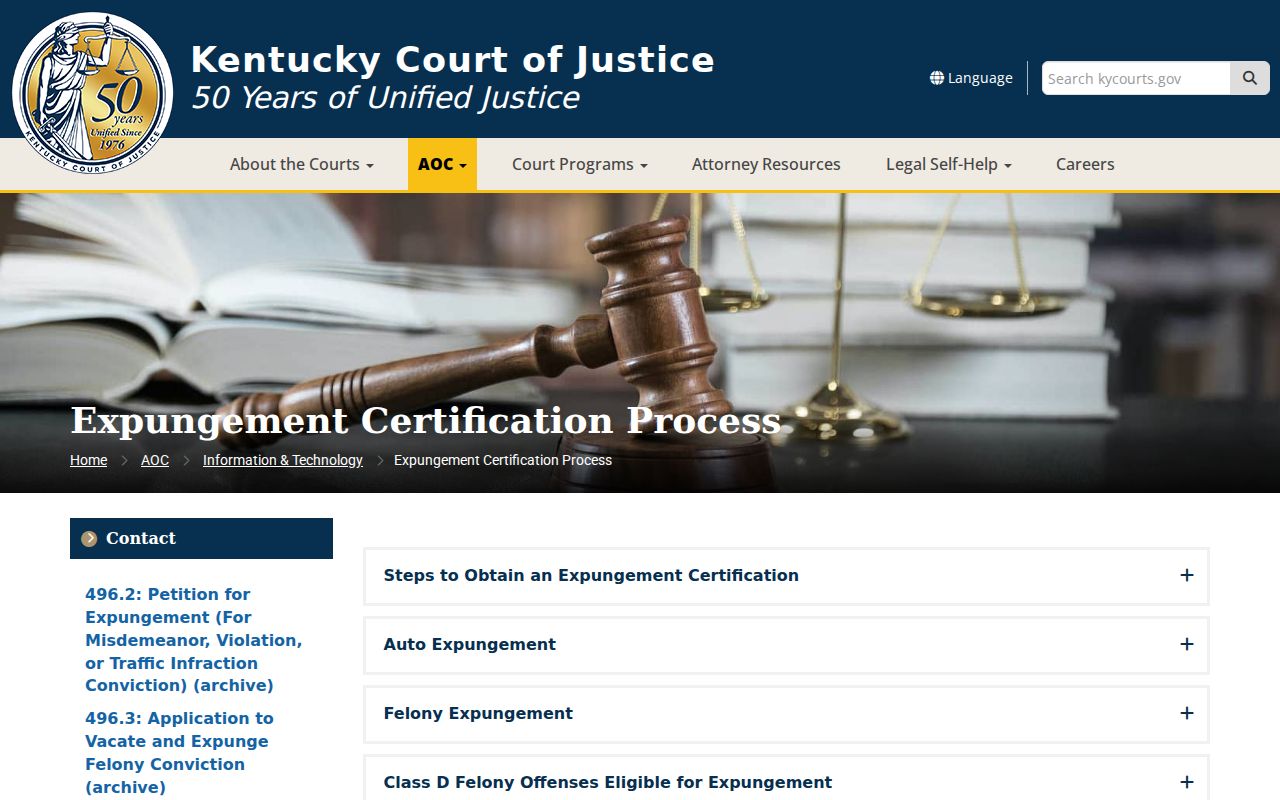
Absence can have several causes, so ask the clerk whether the matter is archived, destroyed by schedule, sealed, or expunged.
Access Rules for Case Records
Kentucky law favors access to public records, but not every item in a Marshall County criminal file is open. Juvenile court records are generally confidential under KRS 610.340. Sealed and expunged matters are withheld. Victim-protected data, medical facts, and other confidential material may be removed from an otherwise public paper. A missing online or report entry is not proof that no proceeding occurred.
The clerk is the authority on court-file access. Kentucky Open Records Act requests under KRS 61.870 through 61.884 serve many agency records, but judicial case records follow court access rules and clerk procedures. Describe the exact docket, order, or filed paper needed instead of asking staff to research a legal question.
Certification is different from a plain copy. A certified copy bears the clerk's authentication and may be needed when the reader must prove the contents of an order. Confirm both copy and certification costs before ordering. The Judicial Building accepts cash, money order, cashier's check, personal check, and cards, with a fee on card payments. ePay handles eligible court payments, not case-file requests.
Federal Cases Leave Marshall County
A federal prosecution tied to Marshall County does not appear as a county Circuit or District case. The county lies in the U.S. District Court for the Western District of Kentucky. PACER supplies federal dockets and filed documents after account registration, subject to the judiciary's current fee rules.
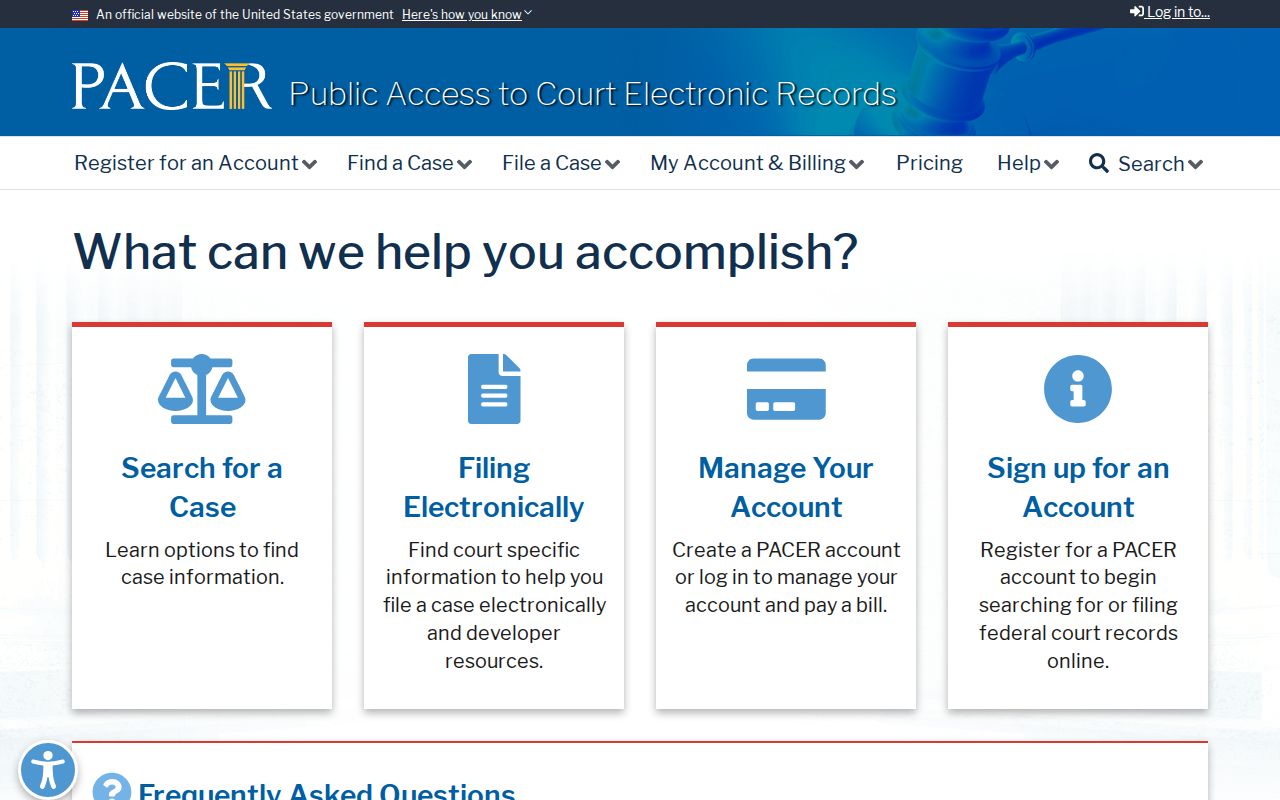
PACER is the federal layer only. A state charge filed in Benton still belongs with the Marshall County Circuit Court Clerk.